How electric trucks can beat TCO of diesel by 10%
Heavy commercial vehicle fleets could reduce their total cost of ownership (TCO) by 10% by switching from diesel to electric powertrains, so long as they optimise their electrification strategy.
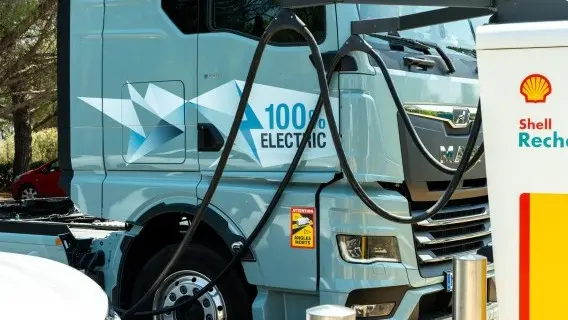
The savings also depend on smart charging at off-peak times of day to reduce energy costs, and unlocking further revenue streams by sharing charging infrastructure with third-party fleets. When a fleet’s trucks are on the road, its charge points can be available to other truck operators, generating income.
 “Electrification is shifting from a cost to a revenue generator,” said Conrad Mummert, Head of SBRS, Shell (pictured above). “Under the right conditions, there is the potential to deliver a TCO advantage of up to 10% compared to diesel.”
There are, of course, a number of local factors, such as exemptions or sizeable discounts from tolls in Germany and the Netherlands for electric trucks, that determine the scale of any savings, as well as business-specific factors – most notably, depots need to have sufficient power capacity without the need for expensive upgrades to the grid.
Comprehensive solution
Shell has just launched PowerPack 500 – a comprehensive DC charging solution for heavy-duty fleets that combines its PowerHub 500 charging hardware with a charge point management system (CPMS) to recharge when electricity prices are at their lowest and balancing power demand to avoid peak load charges. The solution also includes a service and maintenance contract, as well as the Shell Card to access discounted tariffs at both Shell Recharge and semi-public charging hubs.
The oil company’s new report, Electric trucking: From cost barrier to competitive advantage, suggests that fleet operators may not have fully understood the TCO of electric heavy-duty trucks.
It argues that when all the elements of electric trucking TCO – including charging infrastructure and the energy it uses – work together as part of an integrated system, the economics begin to change in favour of electrification.

Electric truck sales
Electrification in road freight is still in its infancy, with electrically-chargeable trucks accounting for just 4.4% of new registrations in the first quarter of 2026, compared to 92.4% for diesel.
Electric trucks cost between 1.6 and 2.3 times more than their diesel equivalents, and their residual values are more uncertain, but their energy savings are considerable.
According to SBRS, electric trucks can be up to 55% more energy efficient than diesel equivalents, which means substantially lower running costs per kilometre if managed effectively. Moreover, the figures in the new report were calculated before the conflict in the Middle East, which has seen diesel pump prices skyrocket.
Moreover, the combination of EU-wide CO2 targets and pending bans on the sale of new heavy duty vehicles with internal combustion engines means fleet operators have to start preparing for zero emission technologies.
EU regulations stipulate that manufacturers of heavy lorries weighing more than 16 tonnes have to achieve a 43% emissions reduction from 2030, a 65% emissions reduction from 2035, and a 90% emissions reduction from 2040, compared to 2019 levels. These targets will also apply from 2035 to lorries weighing over 7.5t.
Latest