The ‘Hormuz effect’: How the war with Iran is speeding up electrification
Call it the ‘Hormuz effect’: the price spike in fossil fuels due to the Iran war is pushing corporate fleets even faster towards BEVs, which are much more resistant to price shocks. “A Trump or an Ayatollah can control the oil taps, but they can’t control the wind and the sun”, says Lucien Mathieu of Transport & Environment. In a statement released this week, the Brussels-based pro-BEV lobby group has just calculated exactly how much more an ICE company car now costs.
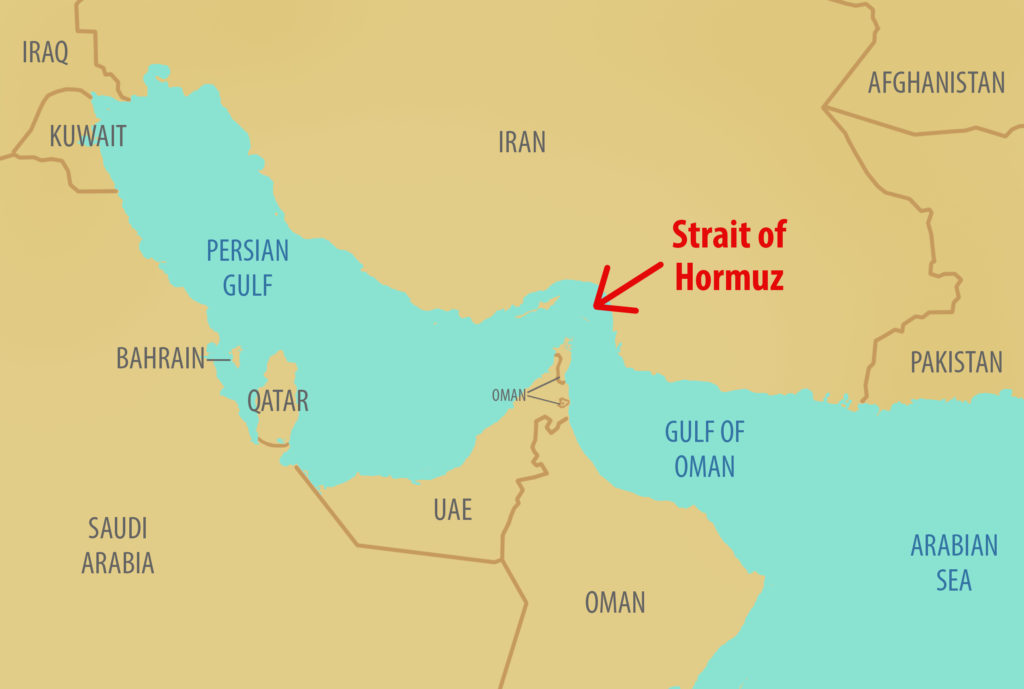
Before the current Iran war, Brent crude cost around $65 a barrel. Early March, when Iran sealed off the Strait of Hormuz, through which flows around 20% of the world’s seaborne oil (as well as 25% of LNG), the price for a barrel of crude oil had shot up past $100, with peaks of around $125. The price of petrol and diesel at pumps across the world drastically increased as well.
Pain multiplied
That’s painful for households, but the pain is multiplied for companies with large fleets – especially in the high-mileage logistics and delivery business, where fuel routinely represents between 20 and 30% of all operating expenses.
When fuel prices shoot up, corporate fleets pay a disproportionately high price. In a statement released on Tuesday, T&E calculated that the Iran conflict hits a petrol car five times more than a BEV. According to T&E,
- fuel for the average car with an internal combustion engine (ICE) costs €14.20 per 100 km – an extra €3.80 directly attributable to the conflict.
- Meanwhile, charging an equivalent BEV costs €6.50 per 100 km. That is €0.70 extra, because electricity prices are up around 12% due to higher gas generation costs. Nevertheless, electricity prices are far less volatile than those for crude oil.
- The difference between both increases shows ICE drivers are hit five times harder than BEV drivers by the current oil shock.
Avoidable extra costs
And how does that work out for company cars? For high-mileage road warriors clocking between 30,000 and 40,000 km per year, the disparity multiplies. T&E calculates an extra €89 per month per ICE company car, versus just €16 for its BEV counterpart. Scale that difference across a 100-vehicle fleet, and you have €7,300 in avoidable extra costs each month.
“Petrol drivers get hammered at the pump every time we face an oil shock”, says Lucien Mathieu, T&E’s cars director. “Electric cars are the best bet to ensure this never happens again. A Trump or an Ayatollah can control the oil taps, but they can’t control the wind and the sun.”
Mr Mathieu directly urges EU lawmakers to raise the ambition in the EU’s Automotive Package, noting that current proposed targets for electrifying large company fleets “are only in line with market trends and would not result in companies electrifying their fleets faster.”
1 billion barrels
Corporate fleets matter disproportionately for electrification, because they dominate new-vehicle purchases in Europe (up to 60% of registrations in some markets), acting as the main pipeline for affordable used EVs later on.
According to T&E, stronger fleet electrification mandates could deliver an additional 3.6 million used BEVs to the second-hand market by 2035, while also avoiding the import of 2.2 billion barrels of oil between now and then, saving the EU about €150 billion.
The EU’s current BEV fleet of about 8 million prevented the import of 46 million barrels in 2025 alone, avoiding a spend of €2.9 billion, while the EU’s remaining ICE fleet required the import of 1 billion barrels at a cost of €67 billion last year.
Could the closure of the Strait of Hormuz do the job of those EU fleet electrification mandates, and speed up corporate fleet electrification? As yet, no major operator has pointed to Hormuz as the reason for ordering extra BEVs – but the crisis is only weeks old, and procurement moves at a much lower speed than that.
Search spike
The longer-term lesson is clear, however. As T&E pointed out, ICE fleets are exposed to the very real risk of very severe fuel price shocks in a way that BEV fleets are not. Signals from the private market are already confirming that point.
In the U.S., used car platform Edmunds reported a spike in searches for electrified vehicles in early March (jumping to 22.4% of total searches). In Germany, MeinAuto saw a 40% surge in EV traffic. Other platforms report similar movements, with consumers often citing fuel prices as the driver for their interest in EVs.
And on the OEM side, VinFast offered a 3% discount on its EVs to petrol car drivers in selected Asian markets, explicitly citing the fuel price hike as its reason.
For corporate fleets, the ‘Hormuz effect’ is changing the depreciation calculus. Higher fuel prices suddenly make electric vehicles – cars and vans – much more cost-competitive. Add savings due to reduced maintenance cost for EVs, and the case for electrification becomes compelling.
Ukraine invasion
Caveats persist: battery supply is stretched, infrastructure remains patchy, and regulatory changes have introduced a measure of uncertainty. If the war ends soon and the Strait reopens swiftly, the urgency to go electric may yet evaporate again. That would be a repeat of what happened after the short, sharp oil shock following Russia’s invasion of Ukraine in 2022.
But two things have changed since then. For one, ‘Hormuz’ confirms, just a few years after ‘Ukraine’, just how fast and (relatively) unexpectedly a global crisis can push fuel prices up, beyond what is tolerable for companies that depend on an active vehicle fleet. That’s an important reminder.
And secondly, that reminder arrives at a moment when the EV market is far more mature than it was four years ago. Even though EV technology is not fully mature, it is getting there fast: charging infrastructure networks are denser, batteries are cheaper, the choice of electrified vehicle models is wider, and crucially, TCO superiority is widening in favour of BEVs. In a recent study T&E points out that BEV prices have fallen for the first time since 2020.
A crisis like the closure of the Strait of Hormuz only widens that TCO gap. The ultimate result is not without its ironies: a conflict that uses the flow of fossil fuels as a weapon of war is offering corporates the clearest proof that the road to a non-fossil future is the cheaper, safer and more predictable one.
Latest