3 reasons OEMs are investing in battery storage—and why fleets benefit
Volkswagen's Elli has initiated its first large-scale battery system, marking a significant step in the company's strategy. This activation signals a notable transition towards the convergence of energy solutions and mobility services within the Volkswagen ecosystem. The deployment of this battery system represents a concrete move by Elli to integrate sustainable energy practices into the electric vehicle landscape. By implementing this large-scale battery system, Elli is paving the way for a more holistic approach, combining energy management with the future of transportation. This initiative underscores Volkswagen's commitment to innovation and its vision for a future where energy and mobility are seamlessly interconnected.
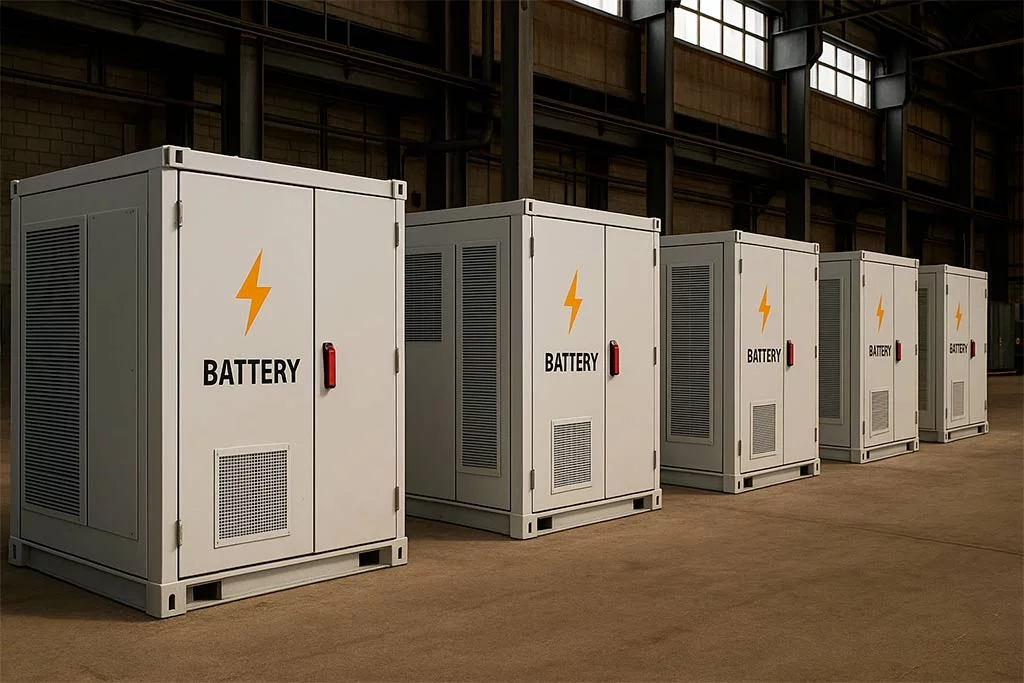
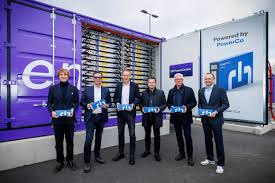
Elli, the energy subsidiary of the Volkswagen Group, has connected its first large-scale battery storage system to the grid near the German city of Salzgitter. The installation delivers 20 MW of power and 40 MWh of storage capacity, marking Volkswagen’s formal entry into the markets for energy storage and energy trading.
This move reflects a broader shift among OEMs: electrification is no longer just about vehicles, but about securing access to energy. For fleet operators dealing with grid congestion, volatile electricity prices and growing charging demand, that shift could prove critical.
The rapid expansion of electric mobility requires more than vehicles and battery production. It depends on a flexible, stable and scalable energy infrastructure. Volkswagen positions this project as a core component of its e‑mobility roadmap, with additional storage sites already in preparation. According to the company, the energy transition can only succeed “if renewable electricity is available when it is needed.” Large-scale storage systems absorb surplus renewable energy during periods of high wind and solar production and release it back into the grid when output drops. This stabilising effect is increasingly relevant in markets where grid congestion is slowing down the rollout of charging infrastructure.
Integrated industrial ecosystem
The storage system Elli is closely linked to PowerCo, Volkswagen’s battery subsidiary. “Together with Elli, PowerCo and Volkswagen Group Components, we are creating a completely new industrial ecosystem,” says Thomas Schmall, Member of the Board of Management of Volkswagen AG responsible for Technology. “The Unified Cell is the global technology platform for both worlds: mobility and energy.” With the new system, Volkswagen becomes an active participant in the energy market. An intelligent algorithm determines how much capacity is deployed at any given moment, enabling efficient use of the storage asset across different market applications.
Similar initiatives across the market
Volkswagen is not alone in moving into large-scale storage. Tesla has already set the benchmark with its Megapack systems, which are deployed in projects ranging from tens to thousands of megawatt-hours and effectively function as grid-scale power assets. Energy companies such as Engie, Eneco and TotalEnergies are rolling out battery systems in the 150 to 800 MWh range across Europe, while developers like Giga Storage are planning multi‑gigawatt‑hour projects that act as virtual power plants. At a smaller but highly relevant scale for fleets, charging operators and logistics hubs are increasingly deploying industrial battery systems in the 1 to 10 MWh range to support high-power charging and mitigate grid constraints. These systems typically combine lithium-ion battery technology with energy management software, enabling peak shaving, load balancing and energy trading — the same principles applied by Elli, but on a local level.
Strategic relevance for electrification
Large-scale battery storage is emerging as a critical enabler for the next phase of electrification. It helps stabilise electricity networks, supports the integration of renewable energy and forms the foundation for expanding high-power charging infrastructure, particularly in regions where grid capacity is limited. Fast-charging operators such as Fastned already deploy on-site batteries to avoid reduced charging speeds during peak demand. Volkswagen’s move shows that OEMs are increasingly stepping into the energy domain, not just to support electrification, but to actively shape the energy system behind it. For fleets, that is ultimately good news: more storage means more reliable charging, fewer bottlenecks and a faster path to scalable electrification.
Latest