In European first, Tesla brings Full Self-Driving to Netherlands
On 10 April, Dutch vehicle authority RDW granted Tesla regulatory approval for Full Self-Driving (Supervised), making the Netherlands the first country in Europe where drivers can legally activate the system on public roads. The rollout began the next day, with an over-the-air software update. This is a watershed moment for autonomous driving in Europe – and for corporate fleets, who will now be grappling with the technology.
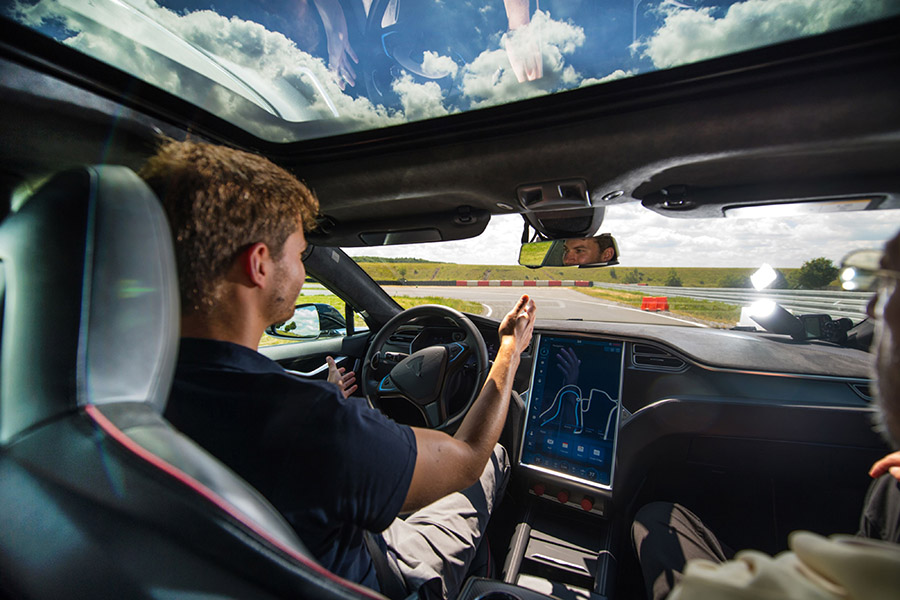
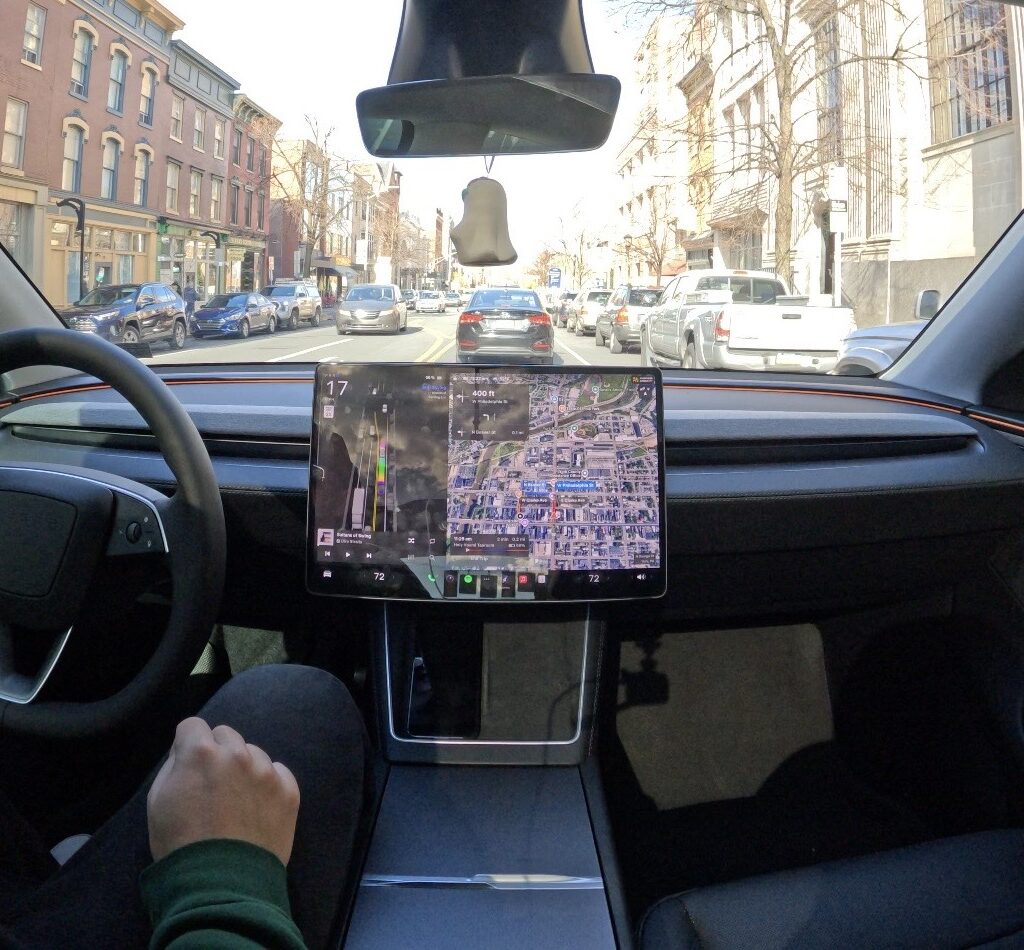
FSD (Supervised) is Tesla’s most advanced suite of driver assistance functions. It uses the vehicle’s external cameras and on-board AI computer to handle steering, acceleration, and braking across a wide range of scenarios – from navigating inner-city congestion over changing lanes at junctions and on highways to responding to traffic lights and identifying and reacting to pedestrians and other road users.
Hands-Ready Mode
As the name indicates, FSD (Supervised) does not mean ‘fully autonomous’. What it does mean differs significantly according to US and EU regulators. While American drivers are allowed to enable a hands-off mode on approved roads, European drivers must always be in what is called ‘Hands-Ready Mode’, and be ready to take back control immediately. In Europe, the driver remains legally responsible at all times.
FSD (Supervised) continuously monitors driver attentiveness via a cabin-facing eye-tracking camera, issuing visual, audio and haptic (i.e. touch) alerts if it detects inattention. If warnings are ignored, the system disables itself temporarily. The EU version’s speed and behavioural settings are also more conservative than the US version. As the RDW notes, both versions are “not comparable one-on-one”.
Both, however, are definitely safer than human driving, Tesla’s data suggests: during the more than 14 billion km driven with FSD (Supervised) around the world, collision rates per km have been up to seven times lower than with unassisted driving.
The system is available as a monthly subscription (€99/mth) or as a one-time purchase (€7,500). Those who previously purchase the Enhanced Autopilot package are eligible for a lower subscription rate.
The Dutch approval creates a regulatory shortcut for introduction in other EU member states. Tesla is actively pursuing rapid approvals in Germany, France, Belgium, Spain, and Italy, and is targeting EU-wide availability by this summer.
It should be noted that FSD (Supervised) is compatible only with Tesla vehicles with Hardware 4 (HW4), the computing platform introduced from early 2023. Vehicles with the earlier HW3 cannot activate the system approved by RDW. For these vehicles, Tesla is targeting the release of an ‘FSD Lite’ before the middle of the year.
Nevertheless, this discrepancy has triggered a Europe-wide collective legal action by owners of a pre-HW4 Tesla who say they were promised their vehicles had the hardware needed to go fully self-driving “in almost all circumstances” in the future.
Practical questions
For European fleet professionals, the introduction of FSD (Supervised) in the Netherlands opens several practical questions.
- Are your Teslas compatible? (HW4 or earlier models)
- Does FSD (Supervised) fall under duty of care? (Lower collision rate could be part of a comprehensive driver safety strategy)
- Is the cost justified? (Subscription or purchase should be weighed against gains in terms of lower repair and insurance cost, as well as less downtime and less driver stress)
As FSD (Supervised) is rolled out across Europe, it could become a key differentiator in favour of Tesla in tender evaluations. If it does, FSD (Supervised) could be on its way to become a mainstream fleet tool rather than a consumer novelty.
Latest