Incentives for EVs ‘Made in Europe’, a great idea? Not everyone agrees
EVs should qualify for inventives only if they are 'Made in Europe': as the European Commission is preparing a new industrial playbook for the automotive industry, that idea is rapidly gaining traction. But that is easier said than done, the OEMs warn.
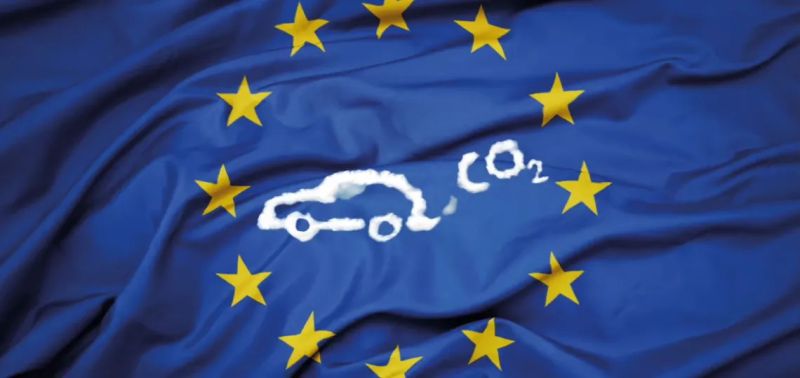
Incentives only for EVs ‘Made in Europe’: it is a simple slogan, but it has complex implications. Behind the European Commission’s idea lies a fundamental question for Europe’s mobility transition: can the continent electrify at scale, while rebuilding an industrial base that has been eroded by global competition? In other words: the push for European content rules is not emerging in a vacuum.
The global EV race has become a geopolitical contest, with China dominating battery production, raw material processing and key electronics. The US, meanwhile, has turbocharged domestic manufacturing through the Inflation Reduction Act. Europe, long committed to open markets, now finds itself debating whether it must adopt a more assertive industrial stance to avoid becoming merely a sales market for foreign-made EVs.
T&E: A window of opportunity
Environmental NGO Transport & Environment (T&E) argues that Europe has little choice. Without targeted incentives for local production, the shift to electric mobility risks deepening dependence on imported batteries and components. T&E sees a window of opportunity: with the right industrial support, Europe could still build competitive capacity in battery materials, cell production and power electronics. But the organisation warns that localisation policies must not slow down EV uptake or inflate prices — a risk that could undermine climate goals.
‘Made in Europe’: What does it mean?
• 2035 emissions framework: Carmakers must achieve a 90% tailpipe CO₂ reduction. The remaining 10% must be offset through EU-made low‑carbon steel, e‑fuels or biofuels, allowing PHEVs, range extenders, mild hybrids and ICE vehicles to remain on the market alongside EVs and hydrogen vehicles.
• Super credits before 2035: Manufacturers can earn additional compliance flexibility for producing small, affordable EVs built in the EU, encouraging more European-made entry‑level electric models.
• Corporate fleet rules: Member States will set mandatory ZLEV uptake targets for large companies. Vehicles benefiting from public support will increasingly need to be zero‑ or low‑emission and made in the EU, boosting both first‑ and second‑hand supply.
• Battery Booster programme: A €1.8 billion package to strengthen Europe’s battery ecosystem, including €1.5 billion in interest‑free loans for EU battery cell producers to accelerate a fully European battery value chain.
Source: European Union.
ACEA: Define ‘Made in Europe’
The automotive industry’s umbrella organisation, ACEA, shares the ambition of a resilient European value chain but urges policymakers to tread carefully. In its recent position paper, ACEA highlights the lack of clarity around what ‘Made in Europe’ actually means. Would it apply to battery cells, modules, packs, raw materials, or all of the above? The association warns that poorly designed local content requirements could raise manufacturing costs, disrupt global supply chains, and create administrative burdens at a time when the sector is already navigating a total of more than 100 delegated acts (which update EU law) and implementing acts (which ensure uniform implementation across all EU member states) in matters of safety, emissions, circularity, and data regulation.
ACEA also points to the international dimension. Europe exports roughly a third of its vehicle production, often under preferential trade agreements. Introducing mandatory local content rules could be interpreted as protectionist, potentially triggering retaliation or undermining existing FTAs. In short: without clear definitions, realistic timelines and strong industrial conditions — competitive energy prices, faster permitting, skilled labour — a ‘Made in Europe’ mandate risks doing more harm than good.
Manufacturers: An unusual rift
The debate has exposed an unusual rift between Europe’s major OEMs. Volkswagen Group and Stellantis, which together represent around 40% of the EU market, have publicly called for a structured ‘Made in Europe’ strategy. In a joint proposal, the two CEOs argue that vehicles should only receive certain incentives if key components — including battery cells, electric powertrains and critical electronics — are produced in Europe. They also propose a CO₂ bonus for EVs built in the EU, and even broader benefits for manufacturers that anchor most of their production in Europe. Their argument reflects a strategic dilemma: both groups are investing billions in European battery plants, yet face intense price pressure from cheaper imported cells. Without compensatory incentives, they warn, domestic production risks becoming commercially unsustainable.
BMW, however, takes the opposite view, the OEM told online magazine Euractiv. The company stresses that electrification depends on global value chains and warns that strict localisation rules could undermine exports and disrupt international partnerships. Its position aligns more closely with ACEA’s caution than with the assertive stance of VW and Stellantis.
Revised CO2 standards
The timing of the debate is not coincidental. The Commission has recently revised the CO₂ standards for cars and vans, introducing more flexibility — including supercredits for small, affordable EVs produced in the EU and a 90% reduction target for 2035 instead of a full phase-out. At the same time, the upcoming Industrial Decarbonisation Accelerator Act and the Green Corporate Fleets initiative are expected to include provisions linking incentives or procurement rules to European content.
For corporate fleets — a major lever in the transition — this could reshape procurement strategies and cost structures.
Illusion or ambition?
Europe is trying to build a domestic EV ecosystem while competing with regions that have already achieved scale advantages. The ‘Made in Europe’ debate captures the tension between industrial ambition and economic reality. Supporters see localisation as essential to strategic autonomy. Critics warn that Europe risks raising costs, slowing EV adoption and provoking trade disputes. What most stakeholders agree on is that a label alone will not secure Europe’s electric future. Without competitive industrial conditions, predictable regulation and sustained demand, ‘Made in Europe’ risks becoming more illusion than ambition.
Latest