How AVs will impact fleet business and operations
Autonomous vehicles will challenge traditional fleet ownership and funding models, demand new maintenance services, and require different insurance policies.
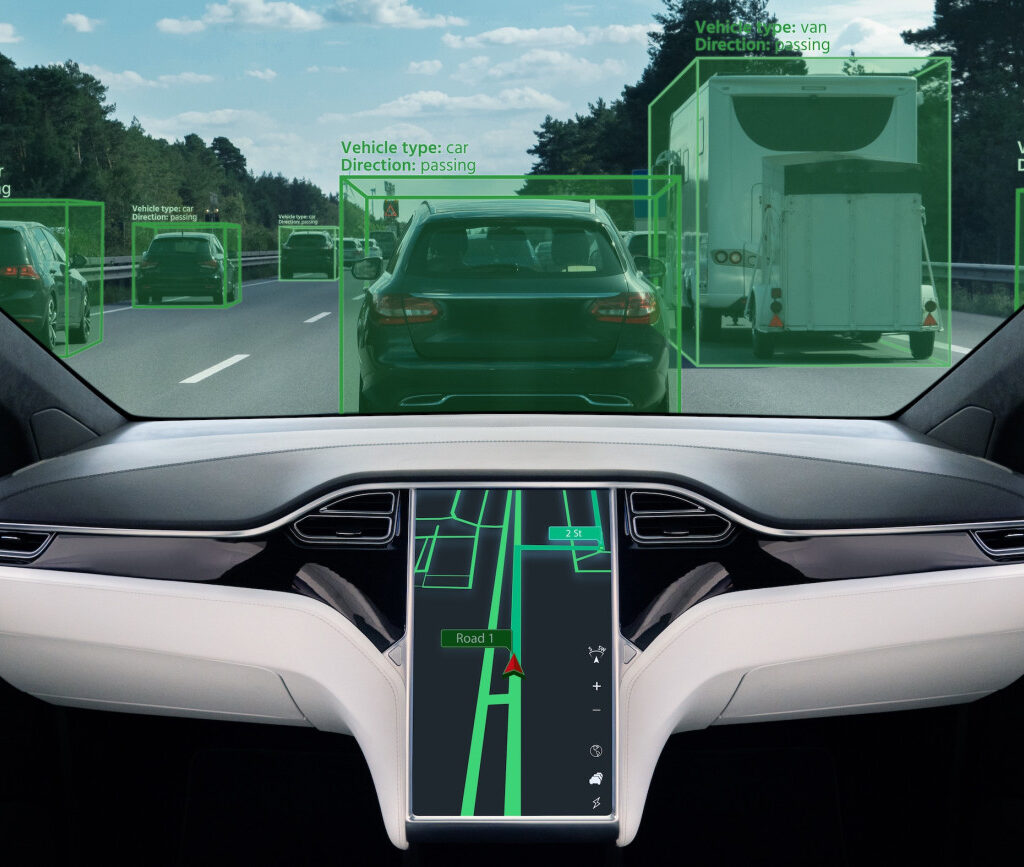
As robotaxi services grow rapidly in the USA and China, and European cities accelerate trials of self-driving technology, Global Fleet spoke to Avninder Buttar, SVP Head of Electrification at Element Fleet Management (pictured below), to discuss the implications of autonomous technologies for the fleet sector.
How will autonomous vehicles be funded?
Avninder Buttar: Autonomous vehicles still require funding because they’re fleet assets — so many of the same fleet‑finance tools (own vs. lease, open‑end vs closed‑end structures) remain relevant. The open question in early deployments is how technology and residual value risk is allocated between the operator, OEM, and AV technology provider.
Like any market with nascent technology, there are uncertainties about useful life, technology obsolescence and the ability of lessors to enforce security rights against proprietary technology. In this sector, that means that residual values are not clear, disposal/reuse of proprietary technology will vary, among other challenges – but as the market evolves, these considerations will become more certain and funding structures should become more predictable.

Will individual fleets operate their own private AVs, or will the market develop a large floating fleet of AVs that businesses hail and hire when required?
AB: We expect both models: dedicated AV fleets in certain commercial use cases (where vehicles need specific upfits, branding, or service-level performance), and shared capacity models where fleets access autonomous vehicles through a partner platform or service contract.
Due to upfit requirements, proprietary branding, and so on, fleets will likely continue to operate using dedicated capacity but will augment (as we see in the last mile delivery space with rentals) their fleets with excess capacity from pooled autonomous vehicles.
With that said, emerging models that see new ‘fleets’ formed to service fractional demand are likely – especially in the consumer sector where personal vehicle ownership may decrease with growing and scaled availability of autonomous vehicles and robotaxis.
For fleet managers, the practical point is that funding, maintenance oversight, safety reporting, and data governance still have to be managed — whether the AVs are owned, leased, or accessed as a service.
Who will be responsible for the service and maintenance of these fleets? Who will be responsible for ensuring AVs are fully charged and cleaned between uses?
AB: Ultimately, specific providers will vary based on a company’s location, vehicle type, and other unique factors. Third-party companies that already offer these services to traditional fleets can also be tapped to support AV fleets as they scale.
In practice, responsibilities can be split across the AV developer, the mobility platform, and third-party fleet operators.
AI is also expected to play a valuable role here. Particularly in driverless fleets, real-time monitoring platforms will help track when maintenance or cleaning is required, report incidents, and manage charging needs and schedules for EVs.
How will different suppliers to the fleet sector need to coordinate their approach to create an AV ecosystem?
AB: An AV ‘ecosystem’ only works when roles and data are coordinated across the OEM, AV technology provider, fleet operator, maintenance network, and insurers. That includes clear responsibilities for safety incident reporting—NHTSA’s Standing General Order requires certain manufacturers and operators to report specific crashes involving ADS/Level 2+ systems.
AI plays a role here as well — it can be used to establish a unified, real-time single source of truth for both vehicle needs, operational requirements, and regulatory compliance.
In which industries / business applications will AVs first appear?
AB: AV deployment will fundamentally change the future of mobility. It’s paving the way for smarter, sustainable transportation as AI and machine learning mature. Early on-road commercialization is showing up most clearly in limited, well-defined operating domains — for example, last‑mile or middle‑mile logistics pilots and robotaxi services in specific cities.
Examples include Gatik, which is completing driverless trucking operations in the U.S. and has signed agreements with companies like Walmart, Tyson Foods and Loblaw.
In ride-hailing, an example of rapid scaling is Waymo, which lists operating cities including San Francisco Bay Area, Phoenix, Los Angeles, and Miami, with numerous U.S. and International cities already announced for expansion.
Autonomous material handling equipment is another early emerging area of innovation where the predictable and controllable operating environment is more simple to map out and manage risk.
What needs to change to see AVs move from off-highway applications to mass adoption on public roads?
AB: Moving from controlled/off-highway environments to broad public-road deployment requires progress in three areas: 1) system capability within a defined operating design domain (ODD); 2) regulatory pathways that support safe deployment; and 3) public confidence built on transparent safety performance.
On regulation, DOT/NHTSA have emphasized modernizing federal safety approaches and avoiding a ‘patchwork’ of requirements, and NHTSA continues to expand its research and rulemaking activity around automated driving systems.
On trust, companies should publish safety evidence appropriate to the use case. For example, Waymo and Swiss Re have published an insurance-claims analysis comparing Waymo’s fully autonomous miles to human-driver baselines. This is an example of the types of data and analysis that will help to build public confidence in autonomous platforms.
What insurance risks will AVs pose, and who will be responsible for this road risk?
AB: The market is too nascent to have a definitive stance on this. Autonomy changes the risk mix. Even with high automation, owners/operators still have responsibilities. For example, keeping vehicles roadworthy and applying safety-relevant software updates. Insurance principles documents note that owner/operator negligence can remain a liability concern alongside product/design issues.
As fleets adopt autonomy, coverage discussions tend to expand beyond traditional ‘driver risk’ to include technology, cyber, and product-liability considerations, depending on the operating model and who controls the vehicle’s behavior.
“Driver safety” will also evolve in these circumstances and we anticipate telematics-driven safety and monitoring products as being key for safe operation of AV’s at scale.
How will AVs impact the total cost of mobility for businesses that currently operate fleets?
AB: The cost impact depends heavily on the application. In freight, the business case often focuses on labor and asset utilization — human drivers operating commercial vehicles are constrained by federal hours-of-service rules, which limit driving time and require rest periods.
In controlled, repeatable routes (for example, some middle‑mile scenarios), studies have modeled potential TCO improvements from autonomous trucks, but results vary by route design, operating assumptions, and technology cost.
In shared autonomous mobility, operational costs (depots, cleaning, maintenance, charging, field ops) are a major part of total cost — one reason fleets and partners pay close attention to the operating model, not just the vehicle hardware.
In general, opportunities for cost savings will also come from more control around fuel efficiency (through electrified vehicles, route optimization etc.), 24/7 utilization, reduced labor expenses, and optimized maintenance.
Will the first AVs be developed by OEMs, or will they be aftermarket conversions by third-party tech companies?
AB: Today we see multiple development paths: 1) OEM-led or OEM-partnered AV programs; 2) AV technology companies partnering with automakers for production vehicles; and 3) some retrofit approaches, especially in specialized commercial or off‑highway applications.
At the moment, examples of significant in-house OEM developments include Tesla and Motional (primarily backed by Hyundai).
Purpose-built platforms also exist – for example, Amazon-owned Zoox has developed a purpose-built robotaxi.
At the same time, the market is dynamic: GM announced it would step back from robotaxis and stop funding Cruise’s robotaxi effort, which underscores how business models can shift even for well-funded players.
Notable third-party tech companies partnering with OEMs include Waymo – deploying its Waymo Driver on vehicles with public relationships with Jaguar Land Rover (JLR), Zeekr, and Hyundai.
Companies like Mobileye partner with OEMs, but also help to provide technology to support ADAS and semi-autonomous capabilities in addition to autonomous capabilities.
What steps should fleet managers be taking to prepare for the arrival of AVs?
AB: Firstly, know that the market is evolving at a rapid pace and that can create a lot of noise when evaluating platforms and technology, so ensure that you are anchored in the industry very early.
Start with operational readiness: document and stress-test workflows (maintenance, incident response, downtime, dispatch), plus data governance (who owns vehicle/incident data, access controls, retention), so you can assess where AV operations can be added without disrupting day-to-day performance.
Early pilots will need to be tightly controlled: plan for limited scale, with clearly defined use cases and operating domains, and build SOPs for safety events and compliance. Change management will be critical, so ensure that key organizational stakeholders are kept up to date on performance and safety.
Finally – understanding that the technology will evolve and improve – staying connected to the market and ecosystem will be critical for maintaining an up-to-date perspective.
Latest