Germany changes law to support vehicle-to-grid (V2G) charging
The German Government has changed the law to make vehicle-to-grid (V2G) charging more financially attractive.
The Bundestag has amended the energy industry law so that electricity stored in stationary or mobile batteries then fed back into the grid will be largely exempt from network charges and, in some cases, electricity tax, too.
Prior to the change, the law did not consider vehicles as storage devices, and so V2G, also known as bidirectional charging, faced two sets of network charges and electricity tax, once when the vehicle charged from the grid, and secondly when it supplied power back to the grid.
V2G financial benefits
Charging an electric vehicle when electricity prices are low and feeding it into the grid when prices are higher could generate revenues of up to €500 euros per vehicle per year, according to an analysis by the Reiner Lemoine Institute on behalf of Agora Verkehrswende, a Berlin-based think tank focused on climate-friendly mobility.
These revenues could be even higher if a fleet or private driver can charge their EVs from their own photovoltaic solar panels.
Christian Hochfeld, Director of Agora Verkehrswende, said financial incentives on this scale could accelerate the adoption of EVs.
“In the best case, the electricity costs for the annual mileage of an e-car can be fully compensated for – emission-free at zero cost!” he said.
OEM reaction
Dr. Marcus Bollig, Managing Director of the VDA (German Association of the Automotive Industry), welcomed the Bundestag’s change to the law, describing V2G as a central technology for the attractiveness of e-mobility as well as for a renewable, flexible energy system.
“More than 20 battery-electric vehicle models available in Germany are already prepared for bidirectional feedback into the power grid,” he said.
But Bollig challenged why the abolition of the electricity tax double charge will initially be limited to users with their own solar panels.
V2G supports renewable energy
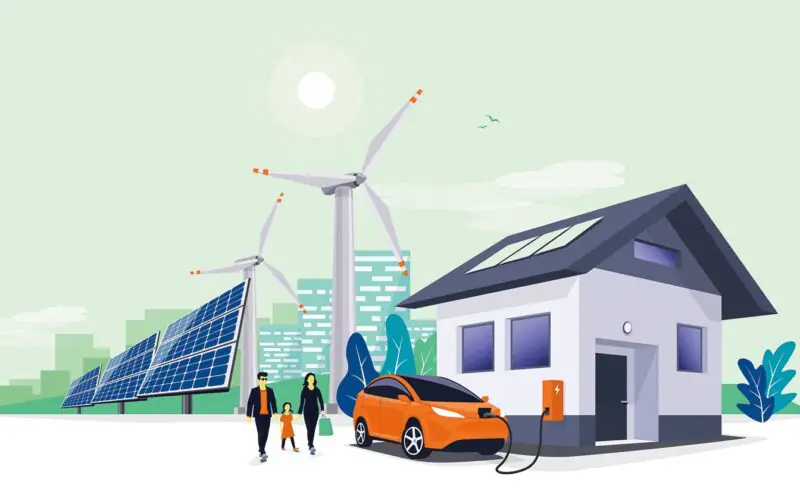
V2G has the potential to offer vital flexibility to electricity grids. By charging when there is an abundance of renewable wind and solar energy, and then feeding this electricity back into the grid, EVs can help to compensate for the fluctuating levels of renewable power and boost the stability grid.
“This enables a larger share of renewable energies in the electricity mix and lower electricity prices,” said Hochfeld.
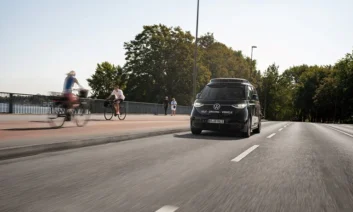
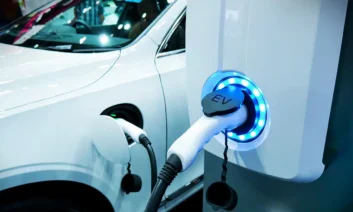
An increasing number of EVs, including the new Kia PV5 van, Nissan Leaf, Volkswagen ID. models with the 77 kWh battery, the BYD Dolphin, and the new BMW iX3 (pictured top), now support V2G applications.
Free charging
Last year, leasing giant Arval launched Arval Energy, designed to bridge mobility with energy, and focused particularly on V1G, V2G, and Vehicle-to-Home (V2H).
In the UK, Octopus Energy, the UK’s largest energy supplier, has partnered with BYD to offer customers a ‘Power Pack Bundle’ that includes a leased V2G-ready BYD Dolphin, a V2G Zaptec Pro charger and access to a smart electricity tariff that offers completely free charging at home. Octopus Energy says this could cut electricity bills by £620 (€700) a year compared to charging their EVs on a standard variable tariff.
Greg Jackson, Founder of Octopus Energy Group, said: “V2G is the game-changer for drivers and the grid. For the first time ever, drivers can effortlessly power their homes and help the grid – and drive for free in return. V2G is here, available at scale, and ready to revolutionise our entire energy system.”
Stella Li, Executive Vice President of BYD, said the project will enable BYD customers to unlock the full potential of EVs, not simply as transport, but as dynamic assets that can play a key role in supporting the grid.
“We’re enabling EV owners to play an active role in the energy ecosystem, reducing costs and increasing the resilience of renewable power systems,” she said.
Latest