Expanding charging infrastructure and lowering costs to unify the EU electric mobility market
A symposium hosted by Confrontations Europe at the European Parliament unpacked the current challenges and roadblocks that Europe is currently facing in the electrification transition. Panel discussions full of leaders and experts across the European government, leasing, and charging sectors addressed head on what needs to be done to further re-solidify Europe’s place in the race.
François Kalfon, MEP (France, S&D) and member of the TRAN Committee, stressed a key issue highlighting the need for Europe to secure control over critical technologies such as batteries and raw materials.
“We have to control the core of the value chain — batteries and strategic components — if Europe wants to remain competitive,” he said.
Kalfon also warned of the geopolitical stakes of the transition. “China is going to kill the car industry if we do nothing,” he said, calling for fair competition and stronger European industrial policy.
Climate and health pressures
Electrification is also essential for climate policy. According to Michael Derdevent, the President of Confrontations Europe, transport accounts for around 28% of greenhouse gas emissions in the EU, making it a key sector for decarbonisation.
“We feel the Green Deal is essential,” he said. “We must redouble our efforts to reach our climate goals.”
Air pollution remains a major concern as well. Patrice Geoffron, the Professor of Economics, and Director Center of Energy and Climate Change Economics (CGEMP) at University Paris Dauphine, said “mortality from air pollution is estimated at 200,000 premature deaths per year in the U.S.” He pointed at the situation being an epidemic.
Infrastructure is missing
While EV adoption is increasing as around 17% of new car sales in 2025 were electric, charging infrastructure still remains uneven across the EU.
“We should not need 15 different charging cards,” Kalfon said. “You should be able to pay with your mobile phone across all charging points.”
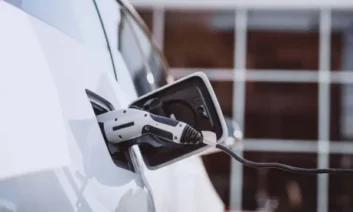
Industry representatives emphasized that fast-charging networks are key to consumer adoption. According to Jacques Galvani, the Director of Atlante France, charging times are already approaching traditional refuelling speeds.
“Charging can take just 15–20 minutes,” he said. “Owners want something closer to the ‘fill it up’ experience.”
Affordability is key
Affordability remains a major barrier to the widespread adoption of EVs.
“We need to attract younger drivers, and they cannot afford expensive vehicles,” Galvani said. “They want smaller and more affordable EVs.”
A big emphasis was made on rural areas lacking access to charging infrastructure. “If you live in rural areas, it is almost impossible to charge your vehicle,” he added.
While rural areas need more progression, the main area of success remains in corporate fleets due to TCO favoring EVs. “Electrification is the most powerful lever for decarbonisation,” said Marie-Laure Soulaine, the Group Public affairs director at Arval BNP Paribas Group. However, she did warn that uncertainty in the second-hand market could slow progress. She emphasized the need to focus on second hand vehicles, as they are a key component of the transition.
V2G is changing the game
The transition also requires major changes to the electricity system. Baerte de Brey, the Chief International Officer of ElaadNL, highlighted the potential of vehicle-to-grid (V2G) technologies, which allow EVs to feed electricity back into the grid.
“EV drivers can even make money trading electricity,” he said.
However, expanding charging networks and reinforcing electricity grids will require significant investment. “Accessibility is the major issue,” said Vincent Vettier, the Head of the Mobility Division, Caisse des Dépôts Group. He highlighted the need to structure long-term investment projects.
Similar challenges lie in electric public transport. François Vauxion, Energy Transition Innovation Officer, at RATP Expertises said, “electric buses are roughly twice as expensive.” Additionally, he warned that the transition represents a “wall of investment.”
A need for European coordination
Several speakers argued that fragmented national policies are slowing the transition. Philippe Lamberts, Principal advisor to the President of the European Commission, called for a truly unified European framework.
“We need an actual single market with one set of rules,” he said. “Having 20 different regulatory systems makes the transition much harder.”
Despite the obstacles, a consensus was made that electrification is inevitable. The real question is how quickly Europe can catch up with global competitors.
“The future vehicles will be electric,” Galvani said. “The real question is the pace.”
For Europe, closing the EV gap will depend on expanding charging infrastructure, securing supply chains, lowering costs, and creating a unified European market for electric mobility.
Latest