Can Europe move autonomous vehicles from pilot projects to real streets? 2026
At a time when autonomous vehicles (AVs) are expanding rapidly in the U.S. and China, Europe is grappling with how to pave its own path in autonomous mobility. While countries such as Germany and Switzerland have advanced AV legal frameworks, deployment remains an uphill battle. In a panel discussion at a PAVE Europe conference on the future of AVs in Europe, five experts in the field discussed pain points, future plans, and how to navigate the complex space of AVs.
That tension between Europe’s ambition and the slow pace of rollout framed the discussion, moderated by William Riggs, the Director for Autonomous Vehicles and the City Initiative at the University of San Francisco. All experts agreed that Europe isn’t short on innovation, but what is holding back next steps is fragmented deployment, regulation, and slow procurement.
No smart roads required
Misconceptions about what is needed for further progress in terms of infrastructure remain. Andreas Reschka, Senior Director of Product, Systems and Safety at Pony.ai, shed light on what future streets may look like.
“You don’t need 5G, smart traffic lights or specialized infrastructure. What you need are well-maintained streets and mobility systems that reduce conflict between modes.”
He addressed the issue of curbside parking consuming large portions of European street space, and how AVs could help reclaim those spots, increasing efficiency and enabling shared mobility.
Pony.ai’s vehicles already collect real-time mapping data, including potholes and obstructions, and send the information back to cities. This has made the vehicles live monitors of infrastructure, providing operators with intelligence on how to resolve real-time road issues.
Christoph Ziegenmeyer, Vice President of Communications & Public Affairs at MOIA, Volkswagen Group, added further insight.
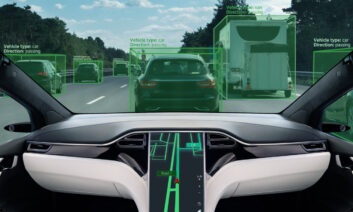
“The challenge isn’t charging or smart roads. Autonomous vehicles already see their environment through sensors. What we really need is infrastructure that shows where construction and congestion will occur, and clarity about who is responsible for providing that information.”
Regulation progresses, but scaling stalls
The main hurdle in Europe with rolling out AVs is governance. While Germany and Switzerland have developed advanced legal frameworks, deployment varies widely between cities and states.
“Every country needs its own law, and even when those laws exist, they differ. Without harmonization, scaling is nearly impossible,” Ziegenmeyer said.
The challenge isn’t just legal. Procurement timelines remain slow, and public sector requirements lag behind the pace of innovation. Michael Nikowitz, Coordinator of Automated Driving for the Federal Ministry of Innovation, Mobility and Infrastructure, highlighted the gap between AV-ready regions and those still in early planning stages.
“There is huge fragmentation. Cities have different specifications and requirements. How is this going to scale?”
Testing is yesterday’s phase
Europe has spent the better part of a decade experimenting with autonomous mobility, but when will the experimental phase end? The panelists agreed that the testing period is over, and implementation now needs to move forward.
“The time for experimentation is over. We need model regions with large-scale deployment,” said Françoise Guaspare, Member of the Expert Group on Urban Mobility at the European Commission.
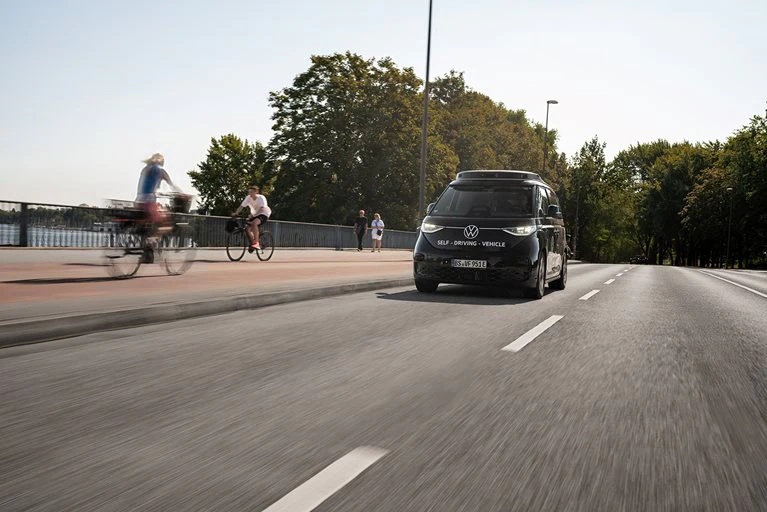
Some European cities have begun implementing plans to move forward. Hamburg, Germany, is preparing to put Volkswagen-developed autonomous shuttles from MOIA into public service, using a fully European supply chain. Meanwhile, Luxembourg has begun initial deployments with Pony.ai.
Public trust as the key to expansion
While robotaxis are often viewed as the most commercially viable entry point, particularly in China and the U.S., the panel noted Europe’s opportunity may be broader. Street sweeping, micro-freight logistics, waste collection and on-demand shuttles could offer earlier paths to scale and public benefit.
However, one major hurdle remains: public trust. Marc Rozendal, CEO of EIT Urban Mobility, emphasized the challenge.
“If people don’t realize it’s safe and it doesn’t affect other traffic, then it won’t scale.”
He pointed to how the Chinese market has already integrated autonomous delivery vehicles into everyday life. Reschka echoed that sentiment, noting that experiencing the technology firsthand changes perception.
“Let people experience the technology. That’s when perception shifts.”
Guaspare added that AVs should be viewed as an addition to the transport ecosystem, not a replacement for current systems.
“Do you think AVs are a magic wand that will transform everything? No. Buses and metros will remain. AVs are an additional service, not the whole system.”
Europe, what’s next?
Despite differences in perspective across the panel, one point was clear: Europe has the talent, research capacity and industrial base to lead in autonomous mobility — but only if deployment accelerates and regulation aligns.
The next few years will determine whether Europe becomes a global AV contender, or remains stuck in a testing phase while full deployment happens elsewhere.
Latest